|
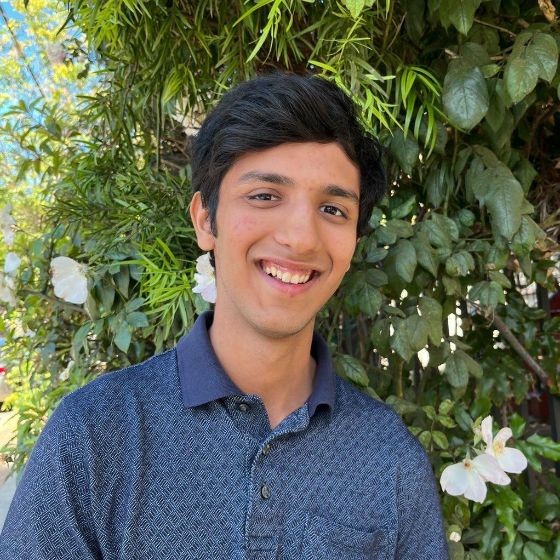
Yuvan Sharma I am a Ph.D. student in Computing and Mathematical Sciences at Caltech, and a research intern at NVIDIA GEAR, where I work with Dr. Jim Fan and Prof. Yuke Zhu. Previously, I completed my undergraduate studies at UC Berkeley in Computer Science and Astrophysics, where I worked on robotics research at the Berkeley Artificial Intelligence Research (BAIR) Lab, advised by Prof. Trevor Darrell. My research is supported by an NSF Graduate Research Fellowship. My research focuses on learning dexterous manipulation from large-scale human data, and on bringing physical structure such as contact dynamics and tactile sensing into how robots learn from demonstrations. Email / CV / Google Scholar / Github |
|
Research |
|
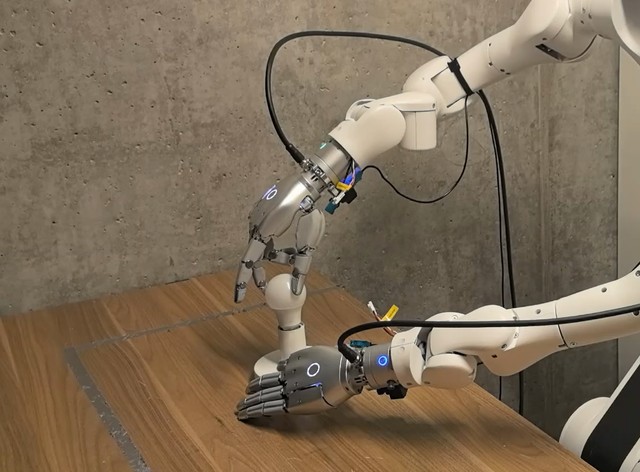
T-Rex: Tactile-Reactive Dexterous Manipulation
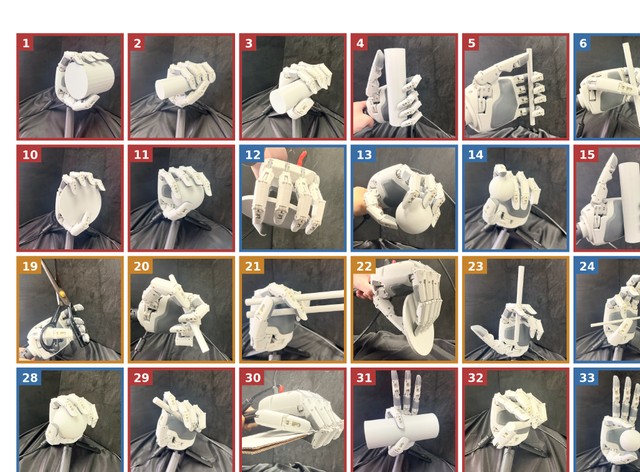
Dantong Niu*, Zhuoyang Liu*, Zekai Wang*, Boning Shao, Zhao-Heng Yin, Anirudh Pai, Yuvan Sharma, Stefano Saravalle, Ruijie Zheng, Jing Wang, Ryan Punamiya, Mengda Xu, Yuqi Xie, Yunfan Jiang, Letian Fu, K. Kallidromitis, Matteo Gioia, Junyi Zhang, Jiaxin Ge, Haiwen Feng, Fabio Galasso, Wei Zhan, David M. Chan, Yutong Bai, Roei Herzig, Jiahui Lei, Li Fei-Fei, Ken Goldberg, Jitendra Malik, Pieter Abbeel, Yuke Zhu, Danfei Xu, Jim (Linxi) Fan, Trevor Darrell CoRL, 2026 project page / arXiv We release a 100-hour tactile-synchronized manipulation dataset built around elementary motor primitives, along with a variable-rate Mixture-of-Transformers policy that couples slow visuomotor action denoising with fast tactile refinement for contact-rich tasks. |
|
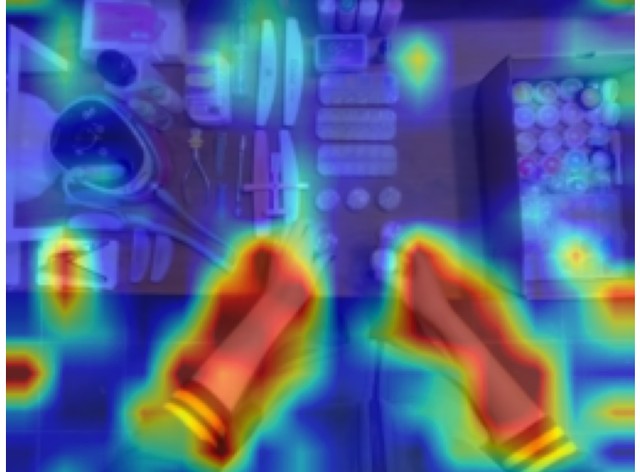
Contrastive Action-Image Pre-training for Visuomotor Control
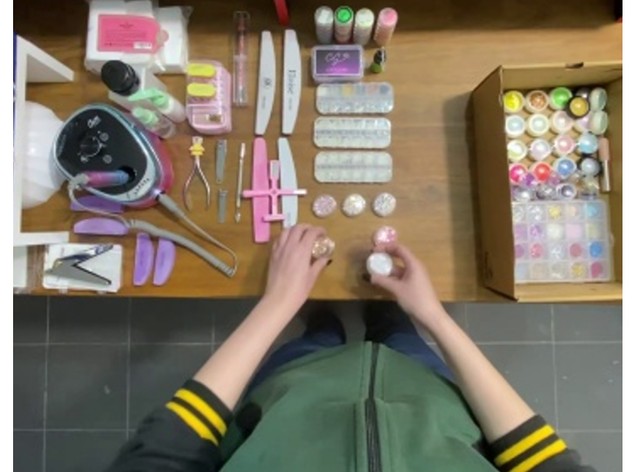
Yuvan Sharma*, Dantong Niu*, Anirudh Pai*, Zekai Wang, Zhuoyang Liu, Baifeng Shi, Stefano Saravalle, Boning Shao, Ruijie Zheng, Jing Wang, K. Kallidromitis, Yusuke Kato, Fabio Galasso, Yuke Zhu, Danfei Xu, Linxi "Jim" Fan, Jitendra Malik, Trevor Darrell, Roei Herzig arXiv preprint, 2026 project page / arXiv / code We introduce CAIP, a vision encoder that learns a joint action-image representation by treating 3D hand keypoints from egocentric human video as a proxy for end-effector actions. Pre-training at scale on human video yields features that transfer directly to dexterous visuomotor control. |
|
Aero Hand Open: A Simulation-Ready Tendon-Driven Hand for Dexterous Manipulation Learning
Nan Wang, Mohit Yadav, Jonathan Wulff, Aidan Rosenbaum, Kezhou Chen, Yuvan Sharma, Xu Dong, Yiwei Tao arXiv preprint, 2026 arXiv We release an open-source, low-cost tendon-driven anthropomorphic hand that ships simulation-ready, including a simulation model of the cable transmission and an identified actuation map. Policies trained entirely in simulation transfer to hardware without fine-tuning or state estimation. |
|
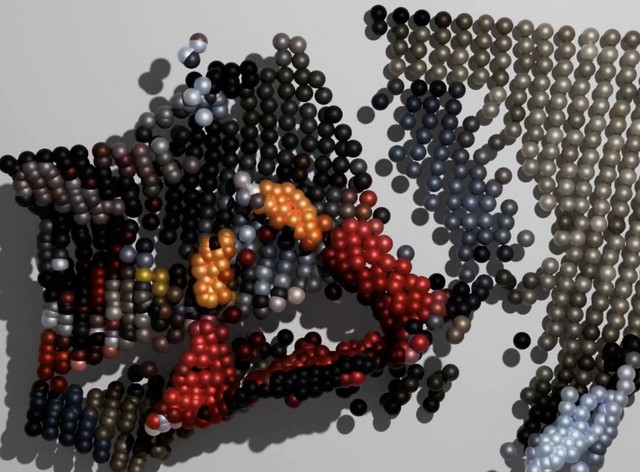
Learning to Grasp Anything by Playing with Random Toys
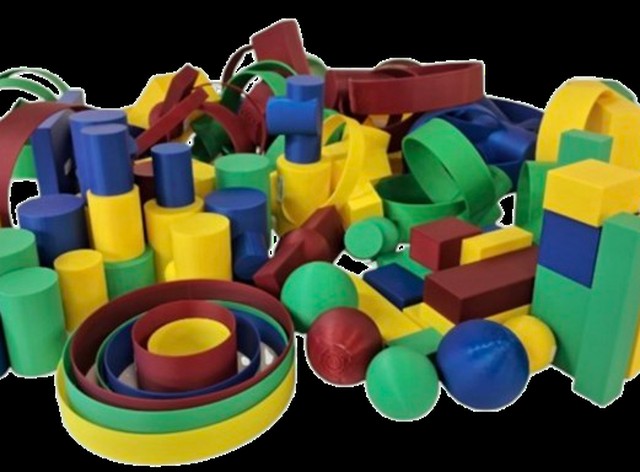
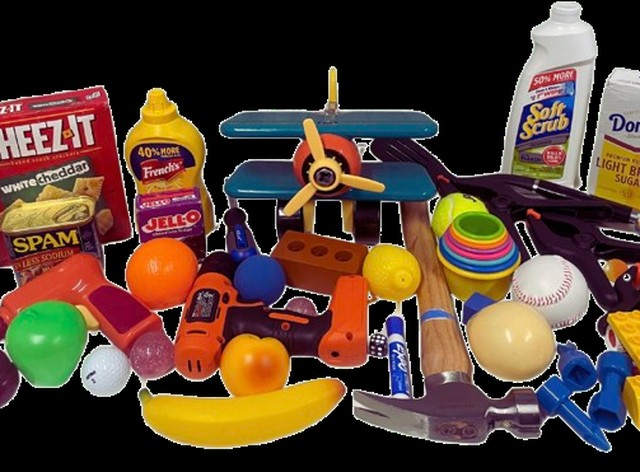
Dantong Niu*, Yuvan Sharma*, Baifeng Shi*, Rachel Ding, Matteo Gioia, Haoru Xue, Henry Tsai, K. Kallidromitis, Anirudh Pai, Shankar Sastry, Trevor Darrell, Jitendra Malik, Roei Herzig ICLR, 2026 project page / arXiv We show it is possible to achieve zero-shot generalization in robotic grasping by training on randomized toy objects and achieving strong performance on real-world objects. This generalization is made possible by a novel object-centric visual representation. |
|
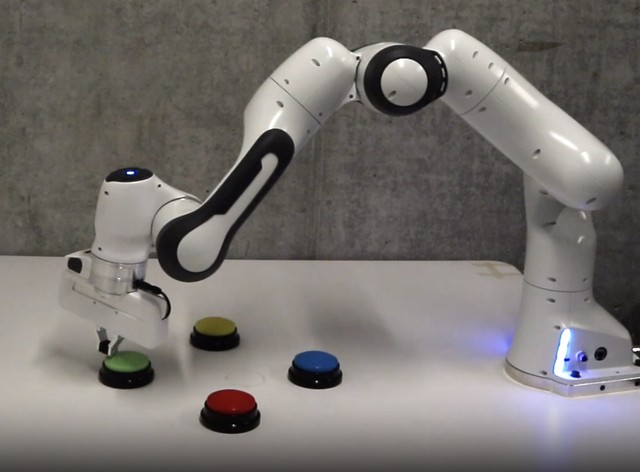
Pre-training Auto-regressive Robotic Models with 4D Representations
Dantong Niu*, Yuvan Sharma*, Haoru Xue, Giscard Biamby, Junyi Zhang, Ziteng Ji, Trevor Darrell, Roei Herzig ICML, 2025 project page / arXiv We develop ARM4R, an Autoregressive Robotic Model that leverages low-level 4D Representations learned from human video data. This results in a stronger robotic model with better spatial and temporal understandings. |
|
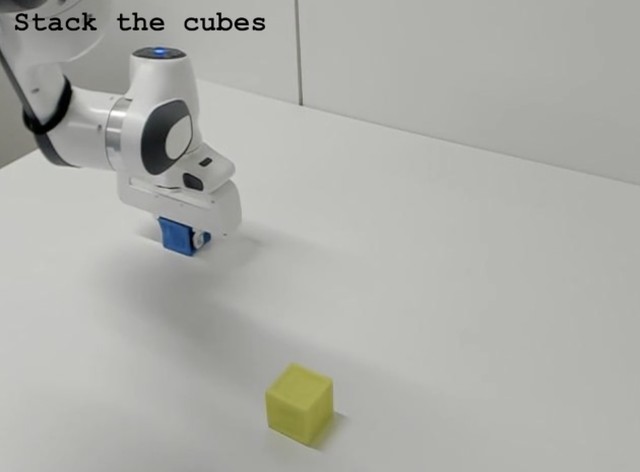
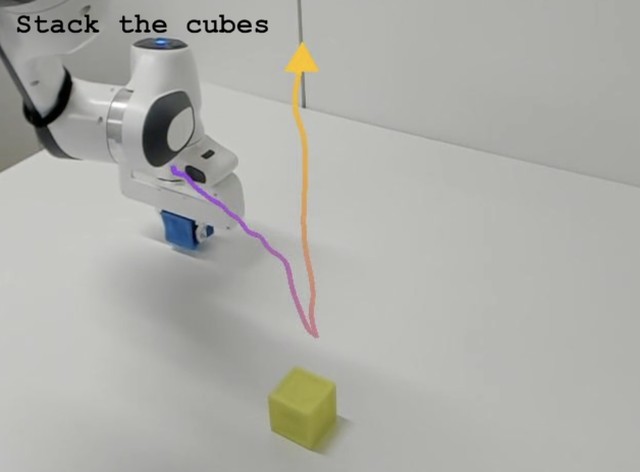
In-Context Learning Enables Robot Action Prediction in LLMs
Yida Yin*, Zekai Wang*, Yuvan Sharma, Dantong Niu, Trevor Darrell, Roei Herzig ICRA, 2025 project page / arXiv We introduce RoboPrompt, a framework that enables off-the-shelf text-only LLMs to directly predict robot actions through in-context learning (ICL) without training. |
|
LLARVA: Vision-Action Instruction Tuning Enhances Robot Learning
Dantong Niu*, Yuvan Sharma*, Giscard Biamby, Jerome Quenum, Yutong Bai, Baifeng Shi, Trevor Darrell, Roei Herzig CoRL, 2024 project page / arXiv We develop LLARVA, a model trained with a novel instruction tuning method that leverages structured prompts and an auxiliary vision task to unify a range of robotic learning tasks, scenarios, and environments. |
|
* denotes equal contribution. |
|
Other |
Projects |
Gaussian Splatting for Robotic Manipulation
Learning Functional Grasps for Real-World Robot Hands |
Teaching |
Research Engineer, EECS 106B Spring 2026
Teaching Assistant, EECS 106A Fall 2025 |
|
Website adapted from Jon Barron. |